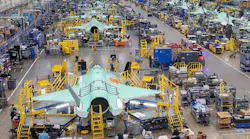
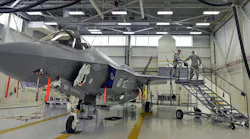
Lockheed Martin and the U.S. Dept. of War have reached a 10-year framework agreement for manufacturing the F-35 Lightning II Joint Strike Fighter jets at a rate of 156 aircraft per year, as well as providing initial spares and modification kits, and performing sustainment service on the aircraft in service.
The F-35 is a single-engine jet with stealth technology and capabilities for air-to-air, air-to-ground, electronic warfare, and reconnaissance missions. With three variant models, more than 1,375 F-35s are in service already for the U.S. Air Force, U.S. Marine Corps, and U.S. Navy, and for the defense forces of 20 other nations. Lockheed Martin the lead contractor for the program that includes over 2,100 suppliers and businesses in more than a dozen countries.
"We have fundamentally changed how we stabilize the American defense industrial base to produce at speed and scale," stated Under Secretary of War Michael P. Duffey. "This agreement with Lockheed Martin proves it. By aligning financial incentives with actual performance, we are ensuring our warfighters are equipped with the lethal capabilities they need to fight and win."
The framework agreement covers Lots 21-30 of the F-45 program, and while final purchase orders remain subject to negotiation and Congressional authorization, the framework gives a green light to Lockheed to make long-term investments in its manufacturing program and supply chain.
The contractor indicated it will fund at least $7 billion worth of “initiatives” supporting the F-35 program. Sources indicate those funds will be used to provide financial stability and demand-predictability to the extensive network of F-35 program suppliers, as well as to scale manufacturing capabilities to prevent strain on the production process.
Other investment objectives include expanding the global F-35 spare-parts inventories to improve accessibility, and funding improvements to depot logistics and repair programs.
The new agreement is the latest example of the Pentagon’s Acquisition Transformation Strategy, an initiative announced in November 2025 to shift from process-driven procurement to an accelerated model ("wartime footing") that prioritizes rapid delivery and production capacity. Previously, the Pentagon has applied its new strategy to increase missile production capacity and accelerate inventory replenishment.
"This multiyear framework strengthens the way we can plan and invest in the F-35 enterprise," stated Lockheed Martin chairman, president and CEO Jim Taiclet. "With the greater certainty that comes from the U.S. government's transformative approach to F-35 production and sustainment, we can make the upfront investments needed to expand capacity, improve efficiency, and build a more resilient supply chain."