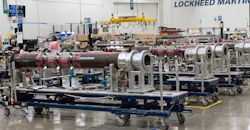
The Pentagon will award up to $58.6 billion to Lockheed Martin to manufacture and supply of PAC-3 Missile Segment Enhancement (MSE) interceptors over a seven-year period, 2026 through 2032. The assignment is modification to an April contract, in line with the Acquisition Transformation Strategy that the U.S. Dept. of War implemented earlier this year.
As an undefinitized contract action (UCA) the final cost and volume of the order is not finalized.
"Today's announcement turns concept into reality, providing industry with the long-term demand signals it needs to build a resilient supply chain, scale production, and deliver critical capabilities to our warfighters at the speed of relevance," stated Michael P. Duffey, Under Secretary of War for Acquisition and Sustainment.
PAC-3 MSEs are high-velocity interceptor missiles used to destroy tactical ballistic missiles, cruise missiles, and advanced aircraft. It uses "hit-to-kill" kinetic energy rather than an explosive warhead, colliding with targets at speeds exceeding Mach 5.
The ongoing war with Iran has precipitated a shortage of critical missile systems, including the Patriot interceptors, according to various reports citing Pentagon and White House sources. The missile inventory has also been affected by U.S. supplying Ukrainian forces since the Russian invasion of that country in 2022.
According to Lockheed, it has “proactively increased production of PAC-3 MSE to address the soaring demand from U.S. and partner nations.”
The PAC-3 MSE missiles and their critical components, like rocket motors and guidance systems are among the Pentagon purchases included in the new framework agreements it coordinated with several major defense contractors, to incentivize them to accelerate production and increase investments in new manufacturing capacity for missile systems.
According to Lockheed, the contract modification will mean it is able “to supercharge PAC-3 MSE production and triple capacity by the end of 2030.”
The manufacturer further highlighted its plan to increase employment by 50% (from 1,200 to approximately 1,850) at the Camden, Ark., where it produces the PAC-3 MSE interceptors.
In addition to expanding Patriot missile production capacity, Lockheed noted it is increasing production for Terminal High Altitude Air Defense (THAAD) interceptors, and investing $8-9 billion through 2030 to modernize over 20 U.S. plants for higher rates of munitions output.
"This is a once-in-a-generation moment, and we are moving with wartime urgency to deliver the Arsenal of Freedom," stated Lockheed Martin chairman, president and CEO Jim Taiclet. "Lockheed Martin is sparing no effort with our investment, hiring and facility upgrades as we deliver on the government's acquisition transformation."