Rapid Prototyping Partners Help R&D Teams Scale
Key Highlights
- External prototyping partners help reduce development timelines by handling manufacturing workloads, allowing internal teams to focus on design and testing.
- Outsourcing eliminates the need for costly equipment investments and ongoing maintenance, providing financial flexibility and faster design validation.
- Choosing a partner with diverse manufacturing technologies and engineering expertise ensures high-quality prototypes that accurately reflect final production parts.
- Strategic partner relationships streamline communication, support design-for-manufacturability, and enable scalable prototyping capacity aligned with project needs.
- Adopting external prototyping solutions fosters organizational agility, allowing R&D teams to innovate faster and respond swiftly to market demands.
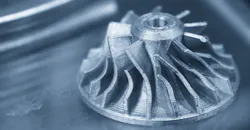
Researchers and designers face a challenging landscape in which standard approaches to product development are not sufficiently fast or cost-efficient to satisfy their backers or potential customers. Rising operating costs, talent shortages, and intensifying competition create conditions in which internal teams struggle to keep pace without external support.
Navigating rising costs and tighter budgets
Development expenses continue to climb while budget pressures intensify across industries. According to a 2026 Capgemini study, 48% of R&D leaders report an increase in development timelines, while a similar percentage need to cut costs significantly to remain competitive. These dual pressures force organizations to find more efficient approaches to prototyping without sacrificing the value or impact of innovation.
Solutions that involve additional equipment or specialized staff amplify budget strain rather than resolving it.
Overcoming talent, equipment gaps. Maintaining a comprehensive prototyping operation requires significant capital investment in a range of technologies. A single R&D department may need multiple types of 3D printers, CNC machines and specialized tooling to support various design requirements.
Each technology demands trained operators who understand material properties, tolerances and process optimization. Equipment maintenance, software updates and continuous training are ongoing expenses that many organizations struggle to sustain, particularly for intermittently used technologies.
Increasing demand for faster speed-to-market. Market expectations for product development speed have accelerated dramatically. In some sectors, artificial intelligence and other emerging factors are compressing traditional nine-month product cycles into just a few weeks, fundamentally changing competitive dynamics. Organizations that cannot match this pace risk losing market position to more agile competitors.
Teams need the ability to run multiple prototyping iterations simultaneously and validate concepts rapidly before committing to full-scale engineering work.
Accelerate development with an external partner
Rapid prototyping partners make faster iteration cycles possible by handling the manufacturing workload that otherwise would consume internal resources. This allows R&D teams to focus on design optimization and testing while prototypes are produced concurrently, resulting in a more compressed timeline from concept to a validated design.
Early-stage prototyping validates critical assumptions before significant engineering investment occurs. According to Harvard Business School Online, the ability to test these assumptions quickly through rapid prototyping ultimately reduces overall development time by preventing costly rework later. Teams can identify design flaws, material limitations and functional issues when changes remain relatively simple and inexpensive to implement.
Speed creates a significant competitive advantage by reducing time-to-market, emphasizes Xingineer, a custom parts manufacturing expert. "Compress development cycles from months to weeks or even days by obtaining physical parts for evaluation almost immediately after design completion," it states. Rather than investing months perfecting designs on paper, development teams can produce physical prototypes within days.
Improve cost-effectiveness, overall ROI
Outsourcing rapid prototyping eliminates the need for substantial capital investment in CNC machining, 3D printing, and tooling capacity, and the specialized personnel required to operate them. Organizations avoid depreciation costs, maintenance expenses, and the risk of technology obsolescence associated with equipment ownership. Particularly for start-up prototyping, this financial flexibility proves critical during early-stage development when capital preservation matters most.
Faster design validation reduces material waste and the cost of failed iterations by identifying issues before full production. When teams discover a design flaw after manufacturing thousands of units, the financial impact includes disposal costs, schedule delays and damage to customer relationships.
According to RapidDirect, a custom parts manufacturer, rapid prototyping is a cost-effective option for conceptualization. It states, "Rapid prototyping is an end-to-end solution ranging from initial design validation to pilot runs. Unlike traditional methods, it minimizes or eliminates tooling to ensure that changes remain low-cost and high-speed."
Converting fixed manufacturing overhead into flexible, project-based costs creates financial agility that supports scaling efforts. Organizations can adjust prototyping volume to current project needs without incurring the burden of underutilized equipment during slower periods.
Ensure end-part quality and functional accuracy
External prototyping partners provide access to industrial-grade manufacturing technologies and materials that many in-house R&D departments cannot economically support. This broader capability set enables teams to produce prototypes that more accurately represent final production parts in terms of material properties, dimensional accuracy, and functional performance.
Selecting the appropriate prototyping process for each development stage significantly impacts dimensional accuracy, surface finish, and functional testing capability. Different technologies excel at different requirements. Some offer superior detail resolution, while others provide better material strength or thermal properties.
For instance, Prototek, a rapid prototyping service provider for start-ups and R&D teams, says multiple advanced manufacturing processes are ideal for creating intricate details in large quantities. “Working closely with NICE Recovery's engineers and design team, we assisted them using our stereolithography and multi-jet fusion equipment. The materials used were Accura® ABS Black and HP PA12. The goal was to achieve injection-molded-like, 3D prints,” Prototek explained.
How to select the right partner
Partner selection is crucial to ensure success. Ontario Dynamics, a product and equipment development services provider, explains that partners assist clients with CAD review, 3D-printing process selection, CNC prototyping, manufacturability analysis, and functional testing. They also help iterate design concepts. The company states: “Most prototypes lead to changes. That is normal. A team may adjust the design, change the material, print another version or switch to rapid CNC prototyping to produce a stronger test part.”
Evaluating a prototyping partner begins with assessing manufacturing capabilities. The ideal partner maintains a diverse range of process technologies, including CNC machining, 3D printing, sheet metal fabrication, and other processes needed to support products throughout development. Having a comprehensive capability set reduces the need to coordinate with multiple vendors, streamlining communication and project management.
Engineering expertise distinguishes competent manufacturers from strategic partners. Organizations should look for partners that will provide design-for-manufacturability guidance, material selection recommendations, and the ability to suggest optimal prototyping processes for each development stage.
A strategic partner helps teams think about the manufacturability design from the beginning of the project. This is a crucial consideration because significant design changes between prototyping and preferred production methods can delay market entry and substantially increase costs.
Additional evaluation criteria include turnaround times, quality control processes, communication
More agile and scalable R&D
The decision to engage external rapid prototyping partners represents a strategic shift in how organizations approach product development. Rather than viewing manufacturing capabilities as something that must be owned, forward-thinking R&D leaders recognize that specialized partners provide access to expertise and technology that would be impractical to maintain in-house.
This approach instills greater organizational agility by allowing core teams to concentrate on innovation rather than equipment operation. As development needs fluctuate, the ability to scale prototyping capacity without corresponding changes in fixed overhead provides financial flexibility. This will support more sustained investment in innovation. The most successful R&D organizations treat prototyping partners as extensions of their own capabilities, creating collaborative relationships that accelerate the path to market-ready products.
About the Author
Emily Newton
Emily Newton is the Editor-in-Chief of Revolutionized, an online magazine exploring the latest industrial innovations.