Linear Motion Technology Enhances Machine Shop Performance
Key Highlights
- Linear motion systems are foundational for maintaining precision, repeatability, and quality in manufacturing processes.
- Advancements in materials, sealing, and lubrication have significantly increased component durability and reduced maintenance needs.
- Integrating sensors and condition-monitoring enables predictive maintenance, minimizing downtime and enhancing system reliability.
- Proper evaluation of entire motion-control systems ensures compatibility, efficiency, and cost-effectiveness over the equipment's lifecycle.
- Upgrading linear components can extend machine life, improve performance, and support automation initiatives like robotics and material handling.
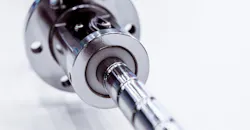
Like all manufacturers, machine shops are complex operations. They are becoming even more complex, and integrated thanks to the adoption of automated systems. As machine shop operators adopt more automated processes, it’s important to consider the linear components driving that technology. Advances in component design are allowing operators to pursue greater efficiency goals and extend the life of their equipment.
Linear motion technology has always been foundational to machine shop performance because it makes it possible to maintain the controlled, repeatable movements required for precision manufacturing. For example: moving a cutting tool, positioning a workpiece, or automating material handling. These are the preliminary steps where we can see linear components providing the accuracy and rigidity necessary to maintain tight tolerances in production and consistent quality in performance.
Reliability and repeatability
Customarily, machine shops rely on linear guides, ball screw assemblies, actuators, and rails to support CNC machines, machining centers, and transfer systems. These components help ensure smooth movement under load, minimize vibration, and maintain repeatability over thousands or even millions of cycles. It’s no exaggeration to state that CNC machining performance is directly tied to the quality of the linear motion system behind it. If motion isn’t precise or reliable, it affects throughput, scrap rates, and ultimately profitability.
This does not mean that there is no progress in the development of these devices. Modern linear motion technology has evolved significantly due to growing demands for higher productivity, increased automation, and longer equipment life. Machine shops today are expected to produce higher volumes with fewer resources while maintaining precision, so component performance has had to advance alongside those expectations.
And linear-motion systems are making important contributions to those improvement efforts. First, component durability has increased through better materials, sealing technologies, and lubrication systems that reduce wear and extend maintenance intervals. Second, there is much greater emphasis on efficiency, lower friction, optimized energy use, and more compact system designs that improve machine footprint and throughput.
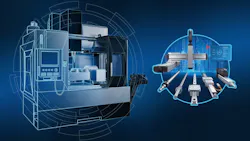
Another area of major evolution is intelligence. Increasingly, linear systems are integrated with sensors and condition-monitoring capabilities that help operators predict maintenance needs before failures occur. Rather than reacting to downtime, machine shops are moving toward predictive maintenance strategies that reduce disruption and improve overall equipment effectiveness.
The primary driver behind all this progress has been the operators’ need for reliability and productivity in increasingly automated environments - which raises a question: How should shop operators evaluate individual linear components?
Systems, not parts
It’s important for operators to avoid evaluating components in isolation. The best approach is to think about the entire motion-control system and the demands of the application.
A component may appear suitable on paper, but performance depends on factors such as load capacity, speed requirements, duty cycle, contamination exposure, rigidity, accuracy, and environmental conditions. For example, an application involving coolant, chips, or abrasive particles may require a completely different sealing or lubrication approach than a clean automation environment.
Operators should also consider long-term total cost of ownership, not simply acquisition cost. A lower-cost component that requires frequent maintenance or replacement can quickly become more expensive through downtime and lost productivity.
Compatibility is equally important. Linear motion components must work seamlessly with drives, controls, motors, and surrounding machine architecture. Evaluating the broader solution ensures the selected technology supports overall machine performance rather than becoming a limiting factor.
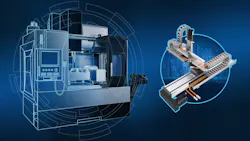
Alternatively, selecting the wrong component can create issues that compound over time. At the most immediate level, operators may experience premature wear, reduced accuracy, vibration, or inconsistent positioning. That can translate into lower part quality, increased scrap, and higher maintenance demands.
In more severe cases, undersized or improperly specified components can fail unexpectedly, resulting in unplanned downtime that disrupts production schedules and impacts delivery commitments.
There is also a hidden cost of inefficiency. If a system is overengineered, operators may pay for unnecessary complexity or energy consumption. If it is under engineered, the machine may never achieve its intended productivity levels. Ultimately, improper component selection affects uptime, lifecycle costs, and return on investment.
Tending to business
Machine shops can easily apprehend the ways that integrating modern linear components impacts operations, including extending performance life. A common example is machine tending or automated loading systems where operators replace legacy slide mechanisms with higher-performance linear guides and actuators designed for contamination resistance and longer lubrication intervals.
In many of cases, shops see immediate improvements in repeatability and uptime because the newer components reduce wear caused by debris and inconsistent loading conditions. Maintenance teams spend less time making adjustments, and systems can operate longer between service intervals.
Another example involves retrofitting older CNC or transfer equipment with updated linear motion solutions that offer improved sealing and load distribution. Instead of replacing an entire machine, operators can often extend equipment life substantially while improving performance and reliability.
Even incremental upgrades at the component level can have an outsized operational impact when multiplied across a production environment.
Automating and extending
As robotics and automated processes become more commonplace, linear motion technology is a key enabler because those systems rarely operate in isolation. In many applications, linear axes are used to extend robot reach, improve positioning flexibility, and create additional degrees of motion.
For example, a robot mounted on a linear transfer axis can service more than one CNC machine at a time, significantly improving utilization and reducing automation costs. Linear motion systems also support pallet transfer, material handling, inspection, and collaborative automation workflows.
For machine shops and other manufacturers facing labor shortages and increasing productivity demands, automation is becoming less of a competitive advantage and more of an operational necessity. Reliable linear motion components help to ensure those automated systems remain accurate, repeatable, and available for continuous operation.
Looking ahead, we’re likely to see continued movement toward smarter and more connected linear motion systems. Condition monitoring and predictive maintenance capabilities will become more common, allowing operators to monitor wear, lubrication performance, vibration, and operating conditions in real time. That data will help prevent failures before they happen and optimize maintenance schedules.
We should also expect continued gains in linear motion system efficiency and compactness. Manufacturers are increasingly focused on achieving more performance from smaller footprints while reducing energy consumption.
Finally, system customization and modularity will continue. Machine shops want flexible automation systems that can adapt quickly to changing production needs, and linear motion technologies will increasingly be designed to support rapid reconfiguration and scalability.
Successful manufacturers, including machine shops, will be the ones that treat linear motion systems not as commodity-grade functions but as a strategic aspect of machine performance, uptime, and long-term operational efficiency.
About the Author
Justin Lackey
Senior Sales Engineer and Product Manager for Linear Technologies and Systems
Justin Lackey is a Senior Sales Engineer and Product Manager for Linear Technologies and Systems at Bosch Rexroth Corp., and an expert in mechatronics and actuator technology. Contact him at LinkedIn.