Rebuilding Trust in Local Manufacturing Marketplaces
Key Highlights
- Globalization and digital sourcing platforms tilt the playing field against U.S. machine shops, making it harder for manufacturers to justify buying locally.
- Communication breakdowns between manufacturers and machine shop operators have shifted relationships from person-to-person to company-to-company, eroding the shared understanding that builds trust.
- Forest management offers a ready example of the way the manufacturing ecosystem has been “rationally” disrupted but organically damaged. Top-down fixes will not restore what grassroots participation once built.
- Trust in business relationships is not transactional. It emerges from shared understanding that depends on communication and participation - both conditions that have deteriorated as local manufacturing networks have weakened.
- Individual micro-interactions - manufacturers learning local shop capabilities, machine shops sharing floor insights - are small investments that rebuild human connections, restore trust, and support resilient supply chains.
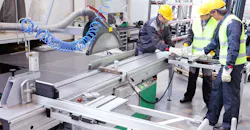
Trust is the coin of the realm. All of us prefer to do business with people and organizations that we trust, and as such it's vital to sustaining productive, long-term commercial relationships. This article explains why trust is the most important condition that makes local manufacturing marketplaces possible. It includes insights that arose from recent discussions with manufacturers and machine shops that illustrate how structural changes in global and local manufacturing have created conditions that erode and, relatedly, break down the human connections that are the fabric of local markets.
It also offers perspective on how individual actions can restore those connections, strengthening local manufacturing marketplaces, and reinforcing U.S. supply chain networks.
The challenge of trading locally in a global economy
Global and local manufacturing environments have evolved in ways that have placed considerable pressure on U.S. manufacturers and machine shop owners. The acceleration of globalization late last century, combined with strategic investments by other nations to build world-class manufacturing expertise in their regions, created viable, frequently lower-cost alternatives to U.S. manufactured products.
Compliance and regulatory costs, institutional investment strategies, and the basic cost of doing business in the U.S. have made it harder for stateside manufacturers and machine shops to compete directly with offshore substitutes.
Add to this the rise of digital platforms that have made it simpler for manufacturers to source parts, and the scales tip considerably in favor of markets that can produce goods quickly and at low cost. What's more, digital platforms take the human element out of the transaction.
Recent engagements with manufacturers and machine shops brought this tension home. The playing field is tilted. It becomes increasingly difficult for a U.S. machine shop to remain profitable versus intensive cost and compliance pressures when there exist low-friction alternatives for manufacturers to source parts outside of the local market.
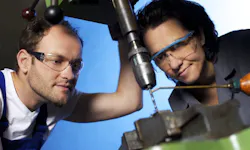
It also presents a difficult challenge for manufacturers who may ask if it's rational to incur additional cost to purchase locally, even if that cost does not reflect additional frictions of doing business globally. The majority of manufacturers I engaged with indicated that they would prefer to buy parts locally, but flagged that if purchasing outside of their local market was going to be lower cost and faster, it may be the most defensible decision.
"We try to do everything we can in-house, from machining, to sheet metal and welding, but normally for large quantities of parts that we could make - or for all the things we cannot make - nine times out of 10 we are sourcing it from China because it is too expensive to source in the U.S.” - A manufacturer
Manufacturers I engaged with frequently cited communication with machine shops as a significant issue. Sometimes it was simply too hard to get an answer, particularly if the product was niche or required specialized skills. One manufacturer put this down to "different communication standards" between businesses. Yet it's not hard to see why responsiveness can be so difficult.
Machine shop operators reported that they faced time-intensive compliance burdens that, when combined with the throughput required to stay afloat, made it challenging to respond quickly to requests. Digital platforms offer a pressure-release valve for an overloaded system - but without a meaningful counterbalance, they risk accelerating regional decline.
One manufacturing buyer suggested that a solution to this challenge may be to expand the range of decision variables on digital platforms - such as comparing costs based on global versus local suppliers, or an explanation of lead times based on the source - which may help manufacturers make informed decisions, and support machine shops to position themselves better, while retaining efficiency and simplicity.
The underlying problem, though, is structural and as such making tactical changes in isolation is unlikely to have a meaningful impact. A historical analogy makes this clearer.
Grassroots movements can help restore what is natural
The practice of scientific forestry developed in Germany in the late 1700s and built upon the idea that natural ecosystems could be optimized for human use. In short, forest utilization could be increased by planting species of trees that would reliably and predictably produce quality wood in ordered rows. This rationalized approach led to the destruction and replacement of old-growth forests, predominately Norway spruce and Scotch pine, and it succeeded on its terms for the first crop - which took around 80 years to grow, after which production yield dropped by 20-30%.

The reason for that was that the original forest was inherently complex and self-sustaining ecosystem, extremely hard to quantify and predict. Every element had evolved and adapted over time to earn a place and a role in that system.
For example, long-term nutrients in the soil that were vital to the resilience of the forest had been continually renewed; in one generation of intensive forestry, most of these nutrients had been consumed and not replaced, so that by the time the second crop was planted those trees had far fewer resources for renewing itself.
Forestry scientists worked to address the disrupted ecosystem. Rather than allowing the ecosystem to resume its natural operation, they aimed to replace naturally occurring elements (organic materials, insects, bird life) with artificial substitutes. Instead of creating conditions for the system to regenerate, they introduced bird houses and had schoolchildren build ant farms to replace what the forest had lost, with limited effect.
Naturally occurring systems are extremely complex in ways that often we only begin to understand once they break down. The manufacturing community is an example of a complex human system. Artificial, top-down solutions for a human system that's been interrupted are about as helpful as nailing bird houses to non-native trees in the hope that they will restore a disrupted ecosystem.
The answer is more likely to be a bottom-up, grassroots movement that revives local manufacturing marketplaces through communication, shared recognition, and trust formation.
Restoring trust through human connection
The manufacturing community is experiencing a similar pattern of disruption and attempted repair. My contacts explained that the connection between manufacturing buyers and machine shop operators is where that disruption is felt most intensely.
"There's been a significant communications breakdown over time. The Apollo program was not built by ISO 9001 shops. While they had standards, a huge part came down to communication and culture … Engineers visited shops. Machinists saw parts assembled. Folks up and down the chain generally understood the goals and requirements and why they were important." - A machine shop operator

Trust makes for resilient, lasting business relationships, but it's hard to develop and maintain it without some important conditions. I argue that trust in business emerges through a sense of shared understanding, of recognizing oneself in the other person you're looking to do business with, and that shared understanding arises through a combination of communication and community.
In our analogy, trust is like the nutrient in the soil of an old growth forest - it's the product of years of contribution and participation. It takes very little time to deplete or lose entirely, but it can be renewed with communication and the recognition of shared rules and norms that come with being an active part of the same community. Manufacturers and machine shops consistently highlighted to me that communication had become a loose foundation stone, without which it's tough to maintain a community, or develop a mutual understanding, or to establish trust.
A machine shop operator pointed out to me that while they work to build relationships with manufacturing clients, those relationships have shifted over time and become company-to-company interactions, rather than person-to-person connections. The reduction in dialogue between an engineer and a machine shop operator adds layers of bureaucracy and leads to an abstract focus on artifacts (such as designs) as opposed to exploring the function of the part and the nature of the problem. This makes it harder to see each other's perspective - to establish a shared understanding – and risks extracting the product while losing the value that an expert brings.
"The real issue is a lack of community culture. The folks doing the actual work don't get the opportunity to talk to each other. Engineers and machinists wouldn't hate each other if they understood each other." - A machine shop operator
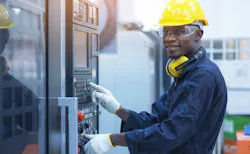
The key question is: How is it possible to strengthen communication, let alone build community, when the local market is already weighted with macro pressures that individuals alone cannot address? The answer is to focus on micro-interactions. These are proactive, low-investment and commercially-minded actions that build real relationships before the pressure hits. As a manufacturer, it means taking 30 minutes a month to identify local machine shops you're unfamiliar with and offering to swing by with a coffee to learn about their business and their capabilities.
As a machine shop, this means taking 10 minutes per job to jot down insights gathered from producing thousands of similar parts and calling the engineer to walk through what they observed.
“I have annoyed my boss into letting me call up engineers. All but once, they opened the tolerance exactly as I asked. And that one time, they were able to adjust the design elsewhere to make my life easier. They're usually thrilled for the feedback. This just doesn't happen much anymore. It shouldn't take a kid with an engineering background being a pain in the rear. It should be the default." - A machine shop operator
Both cases are an opportunity to strengthen personal connections as well as to gather information on skills, capabilities, and how - perhaps with a more formal collaboration and co-investment - your firms can work better together. It's data that can help you make more informed tactical and strategic decisions. And they're relationships that bit by bit help to reinforce a sense of community, which in turn reinforces shared understanding, and trust. This is the foundation of local manufacturing marketplaces and a means to counterbalance structural tensions within the market.
This is what a grassroots movement looks like. Individual micro-interactions that make it easier to connect, because it's the quality of the connection that's most important, not how much time you invest in it. Genuine engagement with real intent will pay dividends by increasing your understanding of available capability and gaps that you can collaborate to address. When each individual in the manufacturing community takes these steps, not only does everyone benefit individually, but these connections serve to strengthen local marketplaces and, in turn, the national manufacturing supply chain network from the ground up.
About the Author
Chris Bassett
Founder
Chris Bassett is a management consultant with over ten years of experience in operations strategy. He is the founder of Green Bean Consulting Group, which helps leadership teams step outside familiar thinking to tackle complex operational challenges more effectively.
He writes on operational expertise, advanced problem-solving, and building stronger manufacturing businesses.