Are 3D-Printed Patterns the Secret to Faster Casting?
Key Highlights
- Integrating 3D printing with standard casting methods shortens lead times and enhances production agility.
- Combining additive manufacturing and milling automates processes, reduces waste, and modernizes foundry operations.
- 3D-printed patterns eliminate the need for molds, enabling rapid iteration and customization in small-batch production.
- Design optimizations like internal lattices and lightweight structures improve performance and reduce material costs.
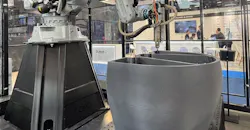
Providers of rapid prototyping services for casting patters continually seek to maintain or gain a competitive advantage, and many consider combining newer technologies with well-established methods. Integrating 3D-printed patterns into traditional casting processes allows them to bypass the wait for CNC-machined hard tooling.
Receiving those products can take months, substantially limiting agility and adversely affecting clients who need orders fulfilled quickly. Transforming nonferrous casting with this newer alternative significantly accelerates time-to-market without sacrificing metal integrity. Here’s what industrial professionals have achieved by using it.
Combining steps for faster output
The patterns used by foundries are the solid forms that create the molds into which workers pour molten metal alloys. Some industrial leaders have explored combining multiple steps, resulting in more efficient processes that do not require shortcuts that could compromise quality.
This is the case for Sheffield Forgemasters Intl. Ltd., a U.K.-based engineering specialist that installed a production cell that combines additive manufacturing and precision milling into a single system. Central to the set-up is a large-scale 3D printer with a robotic arm that integrates 3D printing with subtractive milling. This approach allows SFIL to print up to 60 kilograms of material every hour while automating parts of its production, freeing up workers' time and building their skills.
Senior engineers say this approach will shorten lead times for pattern production, improve casting delivery times and modernize the business. It also produces less waste than conventional methods, making production more sustainable.
Meeting needs without molds
Professionals working with 3D-printed casting patterns can significantly boost output while accommodating clients who need advanced parts. One company working with polymethylmethacrylate (PMMA) 3D printing has used it for rapid prototyping and small-batch production.
Traditional investment casting typically uses wax patterns, made by injecting wax into aluminum molds. However, the molds are expensive and do not allow quick changes. PMMA 3D printing does not need molds because it relies on computer-aided design files. This digital-first workflow means designers can test and refine several iterations of a part in the time it would have taken to produce a single conventional tool.
The industry uses various file types depending on the project scope and type. The company, using PMMA 3D printing to eliminate molds, has replaced them with a binder-jetting process that allows printing sprue systems directly onto the pattern, saving time.
It works with numerous aerospace companies, accommodating the industry’s needs for precision, lightweighting and innovation. In one example, this method achieved a 17% weight reduction in the channel fitting for the Airbus A400M, a four-engine turboprop military transport aircraft. It also facilitated switching from welded assemblies to topologically optimized castings, reducing the weight of a passenger jet’s hinge arm by 47%.
3D printing also enables design optimizations, such as internal passages or lightweight lattices, which increase cooling or flow and lead to simpler, more reliable assemblies, thanks to fewer welds and fasteners. These benefits can increase clients' confidence. Representatives rapid prototyping services can provide real-world case studies to show them that this option is the way forward.
Reducing material-related costs
In addition to saving time, 3D-printed casting patterns can reduce material costs. Although this is not true in every case, professionals can maximize this benefit by tapping into 3D printing's inherent strengths.
Patrick Dunne, vice president of advanced application development at 3D Systems Corporation, recognized that 3D printing excels at making complex shapes, leading him to conclude it could be cost-effective at producing foundry patterns. This benefit is especially appealing to clients who initially hesitate because material-related costs are generally higher than those of traditional foundry methods.
Dunne’s company's solution creates casting patterns that use only 5% plastic, with the rest made of air. He clarified that the material is 10 times more expensive but still only approximately half the cost of wax because of the small amount of plastic needed.
Dunne also said this hybrid approach, which blends traditional manufacturing processes with digital technologies, delivers practical outcomes for customers' extensive applications. Clients can take advantage of 3D printing without automatically assuming they need larger budgets.
Enhancing rapid prototyping foundry services
3D-printed casting patterns remain emerging options, but they may become more popular once industry decision-makers become more open-minded about their implementation. That willingness helps foundry leaders stand out from competitors and secure work from clients who need fast turnarounds that traditional casting methods cannot meet.
Once decision-makers select options to try, they should strongly consider tracking metrics for time, money, labor and overall efficiency. They can then decide if it is worth continuing with the new method. A final thing to remember is that it often takes time to see the full benefits. They should be patient rather than giving up prematurely. Ultimately, adopting this technology is not just about keeping pace — it's about setting a new standard for speed and agility in nonferrous casting.
About the Author
Emily Newton
Emily Newton is the Editor-in-Chief of Revolutionized, an online magazine exploring the latest industrial innovations.