Hidden Air Leaks Are Draining Machine Shop Profitability
Key Highlights
- Ultrasonic leak detection is an effective, nondestructive method way to pinpoint compressed-air leaks.
- Regular visual and auditory inspections, combined with leak tagging programs, improve staff proficiency and early leak identification.
- Smart pressure gauges placed enable real-time monitoring.
- Comprehensive preventive maintenance outlines inspection procedures, response actions, and scheduled reviews.
- Modern energy recovery techniques can circulate escaped air back into the system, reducing energy losses and lowering operating costs.
Machine shops may be spending money without realizing it. A leak of compressed air costs manufacturing plants financial and operational stability. Receiver tanks, condensate drains, actuators, hoses and more are only a handful of problem points in supply and distribution, and at the point of use. Neglecting leaks could lead to repairs and expenses that outpace production profits. How can professionals prevent them from worsening?
The silent killer of efficiency
Production metrics are simple to visualize and record, with many opportunities to make operations leaner. Technicians can review scrap rates, labor costs, and cycle times with minimal effort to find ways to avoid excess spending. These areas for improvement are easy to focus on. Discovering hidden air leaks is more complex, especially when they support diverse processes such as actuators and dryers.
Facilities that prevent air leaks could save $30 to $90 per leak per shift each year if the machine operates at around 100 psi. These costs quickly accumulate in machine shops, especially if no maintenance and auditing protocols are in place.
Escaping compressed air wastes energy and resources, totaling an estimated 80% of compressor expenses. Lower pressure affects profitability in other ways, including:
Higher energy consumption, as equipment like compressors need to run for longer and with more intensity to compensate.
Unnecessary purchasing of other capital equipment, like larger compressors to increase performance in the presence of leaks.
Increased downtime due to higher equipment strain, leading to breakdowns and additional repairs.
Lower machinery efficiency, resulting in equipment performing slowly, lengthening cycle times and potentially affecting output quality.
Proactive fixes
Though leaks are inevitable, shop personnel can limit the trouble by catching them early and instigating quick repairs. These are the most effective strategies for mitigating the damage caused by air leaks.
Ultrasonic leak detection. One of the most complex aspects of leak prevention is finding the source. Ultrasonic technologies are among the most effective. They use sensitive acoustic detection systems to pinpoint locations with greater accuracy.
This is a nondestructive form of testing that raises visibility over equipment and customer satisfaction rates. It recognizes the hissing sounds that devices emit that operators cannot detect.
Regular inspection. While equipment can detect more than the human ear, manual inspections still provide significant value. Visual and auditory inspections should be mandatory, and their effectiveness improves as staff become more familiar with their shops. Many initiate this regularly with leak tag programs, tagging suspicious points for eventual evaluation.
Continuing training and education are essential for learning how to inspect a worn valve stem or filter bowl seal. Frequent reviews improve employee proficiency with each piece of equipment, boosting overall machine shop efficiency. As they tag equipment, they become more attuned to the nuances of the shop’s performance.
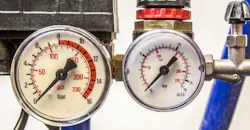
Systemwide pressure monitoring. Smart pressure gauges should be placed in the most vulnerable areas. The compressed-air system could have unexpected spikes or drops, with lower readings indicating potential leaks. Consistent monitoring helps workers remain aware of what high-efficiency numbers look like in ideal operating conditions, so that they might react swiftly to performance shifts. Any drop in pressure can lead to increased energy consumption and suboptimal system performance.
Preventive maintenance. Machine shop teams should collaborate to create bulletproof preventive maintenance programs. Effective PM must summarize the methods that the staff can use to find leaks, how to operate detection equipment and how to act on a problem once isolated. It will also outline the frequency of inspections and the procedures for responding to emergencies. The documentation must clarify maintenance procedures, including signing off on reviewing individual components like compressors, dryers, and filters.
Some organizations may find it challenging to justify PM programs due to the financial and labor investment required. However, one 1/4-inch-diameter leak can cost up to $8,240 annually for brewing manufacturers, demonstrating the cost-benefit analysis of dedicating resources to proactive maintenance.
Recovery mechanisms
Modern research is leading to techniques for capturing wasted energy from compressed-air systems and pneumatic machines. The energy efficiency of the latter is only between 10% and 20%, and experts want to reduce operational costs. They can achieve this by circulating some of the escaped air back into the system. Proper execution would minimize energy losses, make machinery more energy-efficient and lower power costs by 42%.
A leak of compressed air costs manufacturing countless unseen expenses. Thankfully, there are several modern ways to oversee this equipment, including advanced detection sensors and manual walk-around inspections. Every tactic contributes to a higher rate of leak identification, preventing manufacturers from wasting money on an invisible threat.
Leadership must institute training and technologies that empower machine shop teams to find leaks more confidently and consistently. By doing so, the likelihood of profitability is larger.
About the Author
Emily Newton
Emily Newton is the Editor-in-Chief of Revolutionized, an online magazine exploring the latest industrial innovations.