Cutting Tool Demand Strong Despite Inflation

U.S. manufacturers’ cutting tool purchases fell for a second consecutive month in May, down -7.4% from April to $239.8 million in the latest summary. That total is 15.2% higher than the May 2025 result, and it brings the current year-to-date (January-May 2026) total for cutting-tool shipments to $1.2 billion, a 16.8% improvement over the comparable period of last year.
“Shipments dipped in May compared to the previous two months, which were very high and broke records, but were still very strong in nearly all categories reported,” observed Jack Burley, chairman of AMT’s Cutting Tool Product Group and president of Big Daishowa.
The figures are drawn from the monthly Cutting Tool Market Report compiled by AMT - the Assn. for Manufacturing Technology and the U.S. Cutting Tool Institute.
Cutting tool shipments are a reliable indicator of overall manufacturing activity, according to the CTMR sources, because they are critical consumables for manufacturers supplying major industrial sectors, like automotive, aerospace, construction, defense, energy, and numerous others.
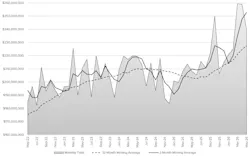
According to consultant Eli Lustgarten, “Shipments of cutting tools kept their robust upward trend in May, though it was driven by cost, reflecting material pricing and supply issues in the industry.” The inflationary effect has been evident in machine shops’ and manufacturers’ purchasing activity during recent months, and even longer in their orders for capital equipment.
“Manufacturing activity continues to show strength, with a favorable outlook for machined-part demand among construction machinery, defense, and aerospace manufacturers,” Lustgarten added. “While inflation is still running hot, recent soft jobs data and falling oil prices will hopefully provide enough cushion for the Federal Reserve to keep rates steady. The U.S. economic and manufacturing outlook for the second half of 2026 looks to continue to improve, barring any geopolitical shocks.”
“Carbide-based tools, such as drills and end mills, showed some noticeable increases in cost per unit – a clear indication that the carbide crisis, due to the lack of raw material, has increased costs for users,” Burley reported. “The demand on the metal cutting industry to increase output has strained the already scarce supply of tungsten. I don’t think we have reached the peak of higher prices for new tools yet, and this may be the right time for users to evaluate their efficiency and improve tool life.”
About the Author
Robert Brooks
Content Director
Robert Brooks has been a business-to-business reporter, writer, editor, and columnist for more than 20 years, specializing in the primary metal and basic manufacturing industries.