How to Reduce Tooling Costs with Modular Custom-Engineered Dies
Key Highlights
- Modular dies significantly reduce initial capital costs by lowering material and machining expenses.
- Quick-change inserts enable rapid changeovers, decreasing downtime and increasing overall equipment effectiveness (OEE).
- Replacing only worn or damaged inserts minimizes maintenance scope and costs, leading to faster repairs and less production disruption.
- Precise engineering ensures modular components meet strict dimensional tolerances, maintaining part quality across variations.
- Strategic planning, including product analysis and vendor partnership, is essential for successful die implementation and scalability.
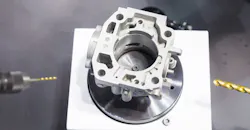
Tooling is among the largest capital expenses on any production floor, and conventional die programs make that expense greater with every new part variation. The math can add up fast, especially for manufacturers running multiple stock-keeping units (SKUs). Modular, custom-engineered die systems reduce that cost while preserving precision through affordable custom dies.
Manufacturers have shifted away from one-size-fits-all tooling solutions toward systems that flex with production demand.
Monolithic dies produce one part geometry, and for many years that has made them the go-to choice for high-volume, low-mix production programs. However, the challenges start when schedules demand variability.
Every new part requires its own dedicated tool, driving up lead times and inflating budgets. Changeovers take up hours of downtime and design revisions force costly rework. For high-mix, low-volume operations, that model falls apart.
What are modular custom-engineered dies?
Modular dies break the one-tool-one-part paradigm. They consist of a master die base with interchangeable inserts that operators swap for different part configurations. One master frame accommodates multiple insert sets, enabling a single tool to produce dozens of variations. Wilson Manufacturing builds systems engineered for adaptability across high-speed converting applications. This configurability makes modular tooling foundational to lean production.
“We don’t accept the limitations of what’s always been done when it comes to crafting precision rotary tooling,” according to Wilson Manufacturing’s online pledge. “Our experts will listen and understand unique challenges before creating a solution that works.”
Where modular tooling cuts costs
Capital efficiency defines the case for modular tooling, and the savings show up across procurement and long-term maintenance.
Minimizing initial capital investment. Instead of commissioning five complete dies for five-part geometries, a modular approach calls for one master die set and five insert kits. The inserts cost a fraction of a full die because they require less material and machining time.
Consider a scenario in which a full monolithic die costs $15,000 per unit. That means five variations total $75,000 in tooling. A modular frame that costs $20,000, plus five inserts at $3,500 each, brings the bill to $37,500.
Slashing changeover and downtime costs. Quick-change inserts turn multi-hour changeovers into minutes-long swaps. When operators install another insert without die disassembly, machines can stay productive longer and even lift overall equipment effectiveness (OEE).
In the metalworking sector, OEE benchmarks often fall below 70%, with changeover time ranking among the primary drags on availability. Companies like Delta ModTech design modular converting platforms that help minimize changeover time and maximize runtime.
Streamlining maintenance and repair. When a cutting edge wears or a forming surface sustains damage, the maintenance scope shrinks dramatically. Technicians replace only the affected insert and keep the master frame in production, reducing both downtime and replacement costs.
Die-cutting solutions provider Pace Punches & Die, in operation since 1978, specializes in standardized components that enable fast interchange and straightforward maintenance.
“Pace’s innovations have revolutionized the steel rule die-making and die-cutting industries worldwide,” the company states. “We supply the highest quality products available because Pace maintains total control of the manufacturing processes from start to finish.”
Why custom engineering makes modularity work
Modularity only delivers when the engineering is precise, so interchangeable components must meet exacting dimensional requirements across every configuration.
Designing for interchangeability and precision. The success of any modular die system depends on how well the engineering team manages tolerance stacking across interchangeable parts. Every insert should align with the master frame to within microns, or deviations degrade part quality. Engineering partners analyze product families to isolate common base features and variable insert features.
Best Cutting Die’s custom design services address this directly, with an in-house team that takes on research and development and reverse engineering to develop modular tooling strategies. This kind of integrated capability shortens the path from concept to production-ready tooling.
“We thrive on adaptability and quick reactions to the ever-changing market, competition, and external environment,” explained Rob Porento, vice president of Best Cutting Die. “What sets us apart is that we listen to customers’ needs.”
Material selection and process optimization. The materials used affect tool longevity and cut consistency. Hardened tool steels, tungsten carbide edges, powdered-metal inserts and specialty coatings serve different substrate demands and production volumes.
Understanding the die-cutting process reveals where modularity delivers the largest efficiency gains. Maxcess, through its International Cutting Die brand, operates application development centers where engineers test materials and build custom tooling for challenging substrates in packaging, nonwovens and specialty labels.
“We manufacture all of our components to meet the highest standard of precision, with the deep application knowledge behind how each component works better together across your converting line,” according to the company.
How to roll out a modular tooling program
A modular rollout requires deliberate planning across product analysis and vendor selection.
Analyzing your product portfolio. Start by mapping your part families and identifying components that share core geometric features but differ in attributes like hole patterns, slot dimensions, or contour profiles. Parts with a significant overlap are the strongest candidates for modular consolidation.
This analysis determines which features belong in the frame and which belong in the inserts. Skipping this step leads to underperforming tooling and misallocated custom die-manufacturing costs.
Partnering with a tooling expert. Working with the right manufacturing partner goes beyond comparing quotes from budget-friendly die makers. Look for design assistance, on-site training and technical support past delivery, plus computer-aided design capabilities. A strong partner also will review your existing tooling inventory and recommend where modular upgrades deliver the fastest payback.
Planning for scalability. A modular system should anticipate future variations. The master die should accommodate current insert configurations and geometries that the team expects over the next three to five years.
Building forward capacity into the initial design maximizes return on investment and prevents the need to rebuild the frame when product lines evolve. Affordable custom dies deliver the most value when they scale alongside your production roadmap.
FAQs about modular dies
Tooling engineers and procurement teams often ask these questions when evaluating modular die systems.
Can modular tooling hold the same precise tolerances as a monolithic die?
Yes. As long as the engineering team designs the master frame and inserts to fit together precisely, modular systems match the dimensional accuracy of single-piece tooling. Keeping mating surfaces in good condition maintains that accuracy over long production runs.
How do intricate part geometries affect the feasibility of a modular design?
Highly intricate geometries or extreme dimensions may limit achievable modularity. The more features that vary between part numbers, the more the insert design must absorb. A skilled team identifies the boundary between the base and interchangeable elements early in the design process.
What data should I prepare before approaching a tooling partner about a modular system?
Bring detailed prints for every part variation, annual volume projections per SKU, current changeover time logs and existing tooling specs. This data enables the engineering team to deliver an accurate cost comparison.
Modular, custom-engineered dies give manufacturers a faster way to stay agile and resilient on the production floor. By investing in interchangeable tooling platforms, companies position themselves to adapt faster, cut waste and build long-term cost savings.
About the Author
Emily Newton
Emily Newton is the Editor-in-Chief of Revolutionized, an online magazine exploring the latest industrial innovations.