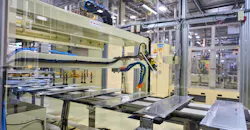
Ultium Cells LLC, the joint venture of General Motors and LG Energy Solution, is revamping one of its electric-vehicle battery plants to an alternative process in support of a new strategy: to produce battery cells for energy storage systems. The Ultium Cells plant in Spring Hill, Tenn., is undergoing a $70-million revamp and will begin producing lithium-iron phosphate (LFP) batteries later this year, to serve domestic demand for electric storage systems.
The venture has consolidated production of lithium-ion cells for electric vehicles at Ultium Cells in Warren, Ohio.
The Tennessee plant also is recalling 700 workers laid off at the end of last year when GM implemented a new electrification strategy in response to weakening consumer demand for battery electric vehicles. Spring Hill's workers are being retrained in line with the plant retooling, according to an announcement.
The joint venture was established by GM and LG in 2019 to manufacture lithium-ion battery cells for GM vehicles. Its first plant in Warren, Ohio, started up in 2022, followed by the Spring Hill plant in 2024.
A third Ultium Cells plant planned in Lansing, Mich., was sidelined, and GM subsequently sold its interest there to LG Energy Solution. Recently, LG entered into a supply agreement with Tesla, and will operate that installation to supply energy storage systems (ESS) produced at Tesla’s new Megapack plant in Houston.
Now, the joint venture is focused as well on manufacturing ESS to supply LG Energy Solution Vertech, a U.S. subsidiary of LG Energy Solution that supplies “vertically integrated ESS including proprietary software, lifecycle services, and advanced warranties.”
The Spring Hill plant will adopt technology and expertise for manufacturing LFP cells that LG developed at a standalone plant in Holland, Mich. Its output will support LG’s production of U.S-made ESS units for North American grids and data centers.
According to an Ultium Cells statement, LFP is the preferred battery chemistry for ESS because its affordable than the high-nickel chemistries (which are most common for EV batteries.) Because ESS installations are stationary, the size and weight of the battery system is less critical than it is for EV design.
“Spring Hill is becoming a key hub in our North American ESS manufacturing footprint which has helped offset slower than expected EV demand,” stated Bob Lee, president of LG Energy Solution North America. “The explosive growth in energy storage diversifies our customer base and product portfolio and provides tangible benefits to American competitiveness in this decade and beyond.”
About the Author
Robert Brooks
Content Director
Robert Brooks has been a business-to-business reporter, writer, editor, and columnist for more than 20 years, specializing in the primary metal and basic manufacturing industries.